
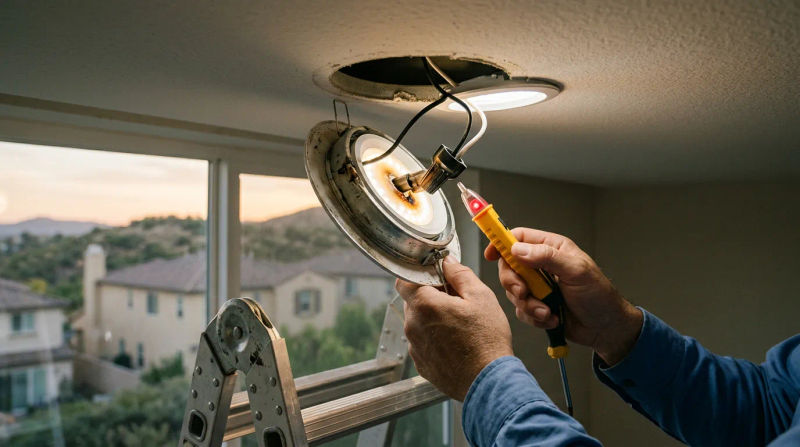
As the days get shorter here in October and we start flipping on our lights earlier in the evening, it’s easy to notice little things you might have missed during the long summer days. One of the most common issues my team and I see this time of year is flickering lights. You’re settling in for the night, and suddenly the lamp in the corner starts to pulse, or the overhead kitchen lights do a little stutter-step. It’s annoying, for sure, but it can also be a warning sign of a deeper issue. Before you get too concerned, know that there are several common causes, and many have simple solutions.
As a handyman with over a dozen years of experience working in homes around the area, I’ve traced this exact problem countless times. Let’s walk through what you should look for, what might be causing it, and when it’s time to put down the tools and call in a professional.
Common Signs and Symptoms
The first step in diagnosing any home repair issue is to observe the symptoms carefully. Not all flickers are created equal. When customers tell me they have flickering lights, I always ask them to get more specific. Here’s what you should pay attention to:
- A Single, Lonely Flicker: If only one lamp or light fixture is acting up, the problem is most likely isolated to that specific item. This is often the best-case scenario.
- Flickering in a Zone: Do all the lights in one room or along one wall flicker together? This points to a shared cause on the same circuit, like a faulty light switch or a loose connection in the first outlet or fixture in the series.
- The Appliance Trigger: Do your lights dim or flicker only when a large appliance like the air conditioner, a microwave, or a vacuum cleaner kicks on? A slight, momentary dimming can be normal. However, a significant or sustained flicker suggests the circuit might be overloaded.
- Random, Whole-House Flickering: This is one of the more concerning flickering lights causes. If lights in different rooms on different circuits all flicker randomly, the issue likely lies with your main electrical panel or even the utility service coming into your home.
Paying attention to when and where the flicker happens gives you a huge head start in figuring out the severity of the problem.
What Causes This Problem
Once you’ve identified the type of flicker, you can start to narrow down the potential culprits. The lights flicker randomly in Chino Hills for a variety of reasons, ranging from simple fixes to serious electrical hazards.
Here are some of the most common causes I encounter:
- The Bulb Itself: This is the easiest to check. An old incandescent bulb's filament can become unstable before it burns out completely. For newer bulbs, especially LEDs, the internal electronics can fail. An LED bulb flicker can also happen if it’s not designed for the fixture it’s in, particularly with dimmer switches.
- A Loose Bulb: It sounds too simple, but vibrations can cause a bulb to slowly un-screw itself just enough to break the electrical contact intermittently. Before doing anything else, make sure the power is off and then check that the bulb is screwed in snugly.
- Incompatible Dimmer Switches: Many homes in our area, especially those built in the 1990s and early 2000s, were equipped with dimmer switches designed for older incandescent bulbs. If you’ve recently upgraded to energy-efficient LEDs, that old dimmer may not be compatible. This mismatch often results in flickering or buzzing because the dimmer can't properly regulate the low power draw of the LED.
- A Faulty Light Switch: The internal components of a light switch wear out over time. Those 20- to 30-year-old switches in many Chino Hills homes have seen a lot of use. If the flickering happens when you touch the switch or if it feels loose or makes a crackling sound, the switch itself is likely the problem. A basic way for how to test a bad light switch at home is to gently wiggle the toggle or rocker; if this action causes the light to flicker, the switch needs replacing.
- Loose Wiring Connections: This is one of the more serious LED bulb flicker loose connection signs. Over years of heating and cooling, the wire connections inside a switch box, outlet, or light fixture can become loose. When a wire isn't making solid contact, it can create tiny electrical arcs, which you see as a flicker. This arcing generates heat and is a significant fire hazard. If you also hear a faint buzzing or sizzling from a switch or outlet, this is a strong possibility.
- Overloaded Circuits: The large, beautiful homes built in this area during the 90s and 00s weren't always designed for the sheer number of electronic devices we use today. A single circuit might be powering a home office, a large TV, and several lights. When you add another device, you might be pushing that circuit to its limit, causing a voltage drop that results in flickering.
- Problems with the Main Panel or Service: If the flickering is widespread and random, the issue could be a loose connection in your main electrical panel (a job for a professional) or even an issue with the electrical service from the utility provider. Sometimes, the return of seasonal rains after a long dry spell can affect underground or overhead service lines, leading to intermittent power fluctuations.
When to Call a Professional
While some issues are simple DIY fixes, electrical work is not the place for trial and error. Your safety is the top priority. I always tell my clients to call for help if they encounter any of the following situations:
- The problem isn't the bulb. If you've swapped in a new, compatible bulb and the flickering persists, the issue lies deeper in the wiring.
- You suspect a loose connection. If you see any signs of a loose wire, like buzzing sounds, a faint burning smell, or discoloration on an outlet or switch plate, call for help immediately. Do not use that switch or outlet until it has been inspected.
- Flickering occurs in multiple rooms. This points to a systemic issue that needs an expert eye to diagnose safely at the electrical panel.
- The switch or outlet is hot to the touch. This is a clear sign of a dangerous wiring problem that could lead to a fire.
- You're not 100% confident. There is no shame in calling a professional for what seems like a small job. We have the tools and training to safely diagnose and repair electrical issues, ensuring the work is done correctly and to code.
Conclusion
That intermittent flicker might just be an annoyance, but it can also be your home’s way of telling you something is wrong. By starting with the simplest checks - like ensuring the bulb is tight and compatible with your fixture - you can often solve the problem yourself. However, it's critical to recognize the signs of a more serious issue.
Don’t let a small flicker turn into a major hazard. Persistent flickering, buzzing sounds, or flickering across multiple rooms are all clear indicators that it's time to get a professional opinion. Acting early not only restores peace and quiet to your home but also ensures the safety of your electrical system for the seasons to come.
If you notice any of these signs, contact a local Handyman professional for an inspection.