
It’s a sound we all know. That grating scrape of wood against wood as you try to close a door that was working perfectly just a few weeks ago. Suddenly, your bedroom door needs a hip check to latch, or the bathroom door sticks stubbornly in its frame. If this is happening in your home, especially as we head into the fall here in Anaheim, you’re not alone. I’m Miguel Ramirez, and with over 12 years of hands-on experience as a handyman, I’ve seen this exact issue pop up in homes every October like clockwork.
The shift from our long, dry summer to the cooler, damper air of autumn can do surprising things to a house. That slight increase in humidity is often all it takes to turn a perfectly hung door into a frustrating daily battle. Before you reach for a sander or start worrying about major foundation problems, let's walk through what might be going on.
Common Signs and Symptoms
A sticking door might seem straightforward, but the specific symptoms can tell you a lot about the root cause. When my team and I get a call about a door problem, these are the first things we look for. See if any of these sound familiar:
- Increased Resistance: The most obvious sign. The door is simply harder to push closed or pull open. It might feel fine for the first half of its swing, then start to bind as it gets closer to the frame.
- Visible Scuff Marks: Look closely at the top edge, the latch-side edge, and the door frame itself. You’ll often see paint wearing away or dark scuff marks where the door is rubbing. This is your primary clue to pinpoint the exact location of the problem.
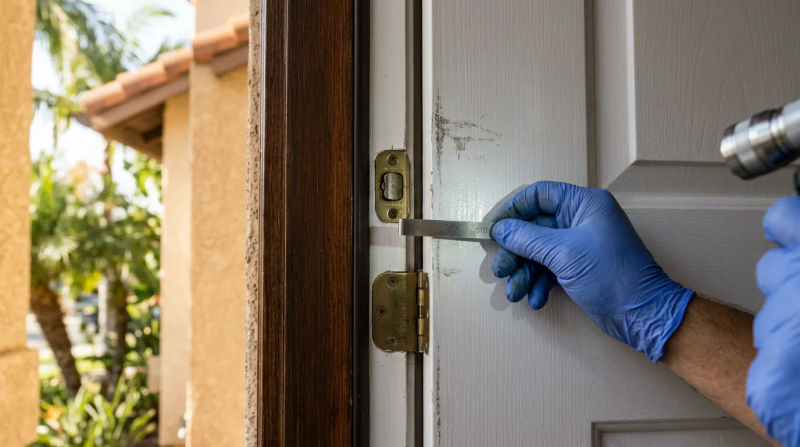
- A Latch That Misses the Mark: This is a classic door won’t latch Anaheim issue. You close the door, but the latch bolt hits the strike plate instead of sliding into the hole. You might have to lift the handle, push on the door, or pull it toward you to get it to click shut.
- Uneven Gaps: Close the door and look at the gap between the door and the frame. Is it even all the way around? A door that’s sagging on its hinges will have a tapered gap - wider at the top corner and tighter near the bottom corner on the latch side.
- Swollen Appearance: Sometimes, you can actually see or feel the humidity swollen door signs. The wood might feel slightly plump or you may notice the seams in a paneled door looking tighter than usual. This is especially common with solid wood interior doors.
What Causes This Problem
Understanding the cause is the key to finding the right solution. A sticking door is usually a symptom of a handful of common issues, ranging from simple fixes to more complex structural shifts.
- Humidity: The Prime Suspect
Wood is a natural material, and it breathes. When the autumn air in Southern California gets more humid, especially after the first rains, porous materials like wood doors and their frames absorb that moisture and swell. It doesn’t take much - even a 1/16th of an inch expansion can be enough to cause rubbing. This is the most common reason for a sudden sticking door repair call in the fall.
- Loose Hardware
Over years of opening and closing, the screws holding your door’s hinges to the frame and the door itself can work their way loose. The top hinge carries the most weight, and it's often the first one to give. When these screws loosen, the entire door sags downward and diagonally, causing the top, latch-side corner to rub against the frame. This is a very common cause for an interior door rubbing fix.
- House Settling
Every house settles over time. This is especially true for the large, two-story tract homes built in Anaheim during the 1980s. These properties have had decades for their foundations to settle into the ground. This movement is usually subtle and harmless, but it can be just enough to shift walls and door frames out of square. If your door frame is no longer a perfect rectangle, the door will inevitably start to bind. If you see cracks in the drywall around the door frame, this could be a strong indicator of settling.
- Paint Buildup
This one sneaks up on you. Every time a door is repainted, a new layer of thickness is added. After three, four, or five paint jobs over the decades, that buildup can be enough to close the small gap between the door and the frame, causing it to stick.
- Strike Plate Misalignment
Sometimes the door itself isn't the problem, but where it's supposed to latch is. If a door has sagged slightly, the latch bolt will no longer line up with the hole in the strike plate on the frame. This forces you to push or lift the door to get it to close, and it’s a clear sign that an adjustment is needed.
When to Call a Professional
As a hands-on guy, I’m a big believer in homeowners tackling what they can. However, it's just as important to know when a problem is better left to an experienced professional.
Good DIY First Steps:
- Check the Hinge Screws: The very first thing you should do is grab a screwdriver and check every hinge screw on the problematic door. If you find any that are loose, tighten them firmly. Sometimes, this simple fix is all that's needed to pull the door back into alignment.
- The Long Screw Trick: If tightening the existing top-hinge screws doesn't work, try replacing one of the screws closest to the door stop with a 3-inch screw. This long screw will go through the door jamb and bite into the wall's framing stud, pulling the entire hinge and the door with it. This can often correct a minor sag.
When to Call for Help:
- If Tightening Screws Doesn't Work: If you’ve tightened the hinges and the door still sticks, the problem is likely more complex. The issue could be swelling, frame movement, or a combination of factors.
- The Door Needs to Be Trimmed: If humidity has caused the door to swell permanently, or if the frame has shifted, the only solution may be to plane or sand down the edge of the door. This requires skill and the right tools. Taking off too much material can ruin the door, and taking it off unevenly will look terrible and create new gaps. A sticking door repair that involves trimming is best handled by someone with experience.
- You Suspect Foundation Settling: If you see large, diagonal cracks in the drywall extending from the corners of your door frame, or if multiple doors and windows in one area of the house are sticking, it’s time to call a professional. This isn't just a door problem anymore; it's a sign that your home's structure needs to be evaluated.
- The Latch and Strike Plate are Way Off: Adjusting a strike plate can sometimes be a simple DIY, but if the misalignment is significant, it often points to a bigger sag or frame issue that needs a more comprehensive interior door rubbing fix.
Conclusion
That annoying sticking door is more than just a nuisance; it’s your home communicating with you. Most of the time, especially in the fall, it’s simply telling you that it’s adjusting to the change in humidity. Simple checks, like tightening hinge screws, can often provide a quick fix.
However, a door that won't latch or is difficult to close can also be an early warning sign of a more significant issue, like structural settling. Don't ignore it. Addressing the problem early can prevent more damage and more expensive repairs down the road, not to mention restoring your peace and quiet.
If you've tried the simple fixes and are still struggling, don't hesitate. Contact a local Handyman professional for an inspection. An expert can quickly diagnose the root cause and provide a lasting solution.