
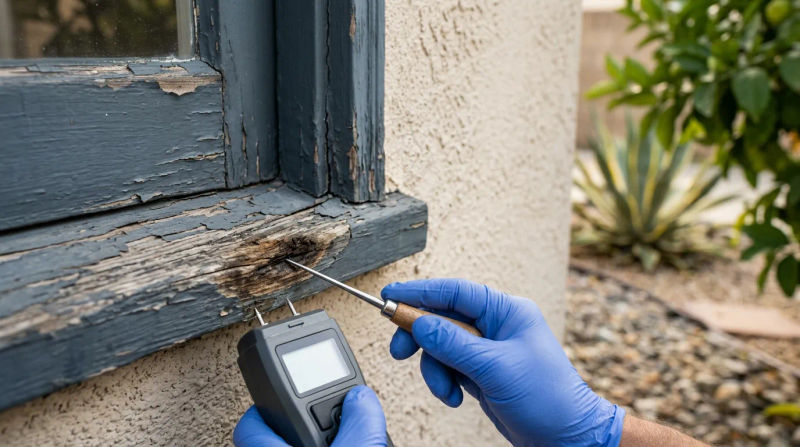
You’re out in the yard, enjoying the last of the warm, dry weather before the seasons change. As you glance at your home, you notice a small section of paint flaking off the trim around a window. It seems like a minor cosmetic issue, something to add to a long to-do list. But from my experience working on homes all around Home Gardens, I can tell you that this small sign is often the first warning of a bigger problem, especially with the October rains on their way. That tiny crack is an open invitation for moisture, and once water gets behind your paint, it can lead to costly wood trim repair down the road.
Here in Southern California, our exterior wood trim takes a beating. It bakes in the intense sun for most of the year, which dries out the wood and weakens the paint. Then, when the damp air and seasonal rains arrive, that thirsty wood soaks up moisture like a sponge. This cycle of drying and swelling is the perfect recipe for peeling paint, rot, and decay. As a handyman, I’ve seen this scenario play out time and again, particularly on the fascia boards, window casings, and door frames of local homes.
Common Signs and Symptoms
Knowing what to look for is the first step in protecting your home. Before the rains set in, take a walk around your property and pay close attention to the wood trim. Here are some of the most common Home Gardens wood trim repair signs my team and I encounter:
- Peeling, Bubbling, or Cracking Paint: This is more than just a cosmetic flaw. Your home’s paint is its first line of defense against the elements. When it starts to fail, it means moisture is either already getting in or is about to. Bubbling, in particular, often indicates water is trapped underneath the paint layer.
- Visible Gaps or Separations: Check where two pieces of trim meet, especially at corners, and where the trim meets the siding. Over time, caulk can dry out, crack, and fall away, leaving a direct pathway for rainwater to seep into the wall structure.
- Soft or Spongy Wood: This is the most definitive way to how to spot rotten wood trim. Gently press on suspect areas with your thumb or the handle of a screwdriver. If the wood feels soft, spongy, or gives way easily, you’re dealing with wood rot. Pay special attention to the bottom edges of window trim and any trim near the ground, as these areas stay wet longer.
- Discoloration and Dark Streaks: Look for gray, black, or dark brown streaks on or around the wood trim. This often signals the presence of mold or mildew, which thrives in damp conditions. It’s a clear sign that water is lingering where it shouldn’t be.
- Swollen or Warped Boards: When wood absorbs moisture, it swells. You might notice that a piece of trim is no longer flush with the siding or that it has a bowed or wavy appearance. This physical distortion is a red flag that the wood has been compromised by water.
- Crumbling or Splintering Edges: The ends and bottom edges of trim boards are especially vulnerable. If you see wood that is crumbling, flaking, or splintering apart, it indicates advanced decay.
- Evidence of Pests: Termites and carpenter ants are drawn to soft, moist wood. Look for tiny holes, sawdust-like material (called frass), or the insects themselves. Pest damage often goes hand-in-hand with moisture problems.
What Causes This Problem
Understanding the root cause is crucial for a lasting repair. It’s not just about fixing the symptom; it’s about preventing it from happening again. The peeling paint on exterior trim causes are often multifaceted.
First and foremost is our local climate. The intense UV radiation from the sun breaks down the chemical bonds in paint, causing it to become brittle and crack. This creates micro-fissures that allow moisture from rain and morning dew to penetrate the wood. Many of the charming, modest Ranch-style homes in Home Gardens were built in the 1950s post-war boom. While sturdy, the original wood trim and construction techniques from that era weren't designed to withstand 70+ years of this sun-and-rain cycle without diligent maintenance.
Another major culprit is failed sealant. The caulk used to seal the gaps between trim and siding, or at corner joints, has a limited lifespan. Once it hardens and cracks, it creates a superhighway for water to get behind the trim and into your home's sheathing.
Poor drainage also plays a significant role. Clogged gutters are a primary cause of rotted fascia boards. When gutters overflow, water cascades directly onto the wood trim along the roofline, keeping it saturated for extended periods. Similarly, sprinklers that constantly spray against the side of the house can cause trim near the foundation to rot prematurely.
Finally, sometimes a past repair is the source of the problem. If a previous painter or handyman didn't properly prep the surface, used the wrong type of paint or caulk, or failed to replace a piece of wood that was already starting to decay, the problem will inevitably return, and often worse than before.
When to Call a Professional
Some homeowners are comfortable with DIY projects, and I fully support that. However, it's important to know when a job is bigger than it looks.
You can likely handle minor cosmetic issues yourself. If you have a few small chips of paint on a board that is otherwise completely solid and dry, a little sanding, priming, and touch-up paint might be all you need. Re-caulking a very small, hairline gap that shows no signs of water intrusion can also be a manageable DIY task.
However, you should call for professional help when you see any of the more serious signs. If you find any soft, spongy wood, that’s a clear signal for a professional wood trim repair. Simply painting over rot is like putting a bandage on a broken arm - it hides the problem but does nothing to fix it. The rotted section needs to be completely removed and replaced with new material, and the source of the moisture must be addressed.
Large areas of peeling paint, warped boards, or significant gaps also warrant a professional eye. An experienced professional can properly diagnose the extent of the damage, which might be more widespread than it appears on the surface. They have the right tools and expertise to replace damaged sections, ensure everything is properly sealed, and match the new trim to your existing style, especially on the classic 1950s homes common in our area.
Conclusion
Your home’s exterior trim is more than just a decorative element; it’s a critical part of its defense system against water intrusion. Paying attention to the early warning signs - like peeling paint, soft spots, or visible gaps - can save you from much more extensive and expensive repairs later. With the rainy season approaching, now is the perfect time to inspect your home.
Taking action on a small issue today can prevent a major headache tomorrow. Don't let a minor flaw become a major failure when the winter rains arrive. Protect your investment and ensure your home stays dry and secure for years to come.
If you notice any of these signs, contact a local handyman professional for an inspection.