
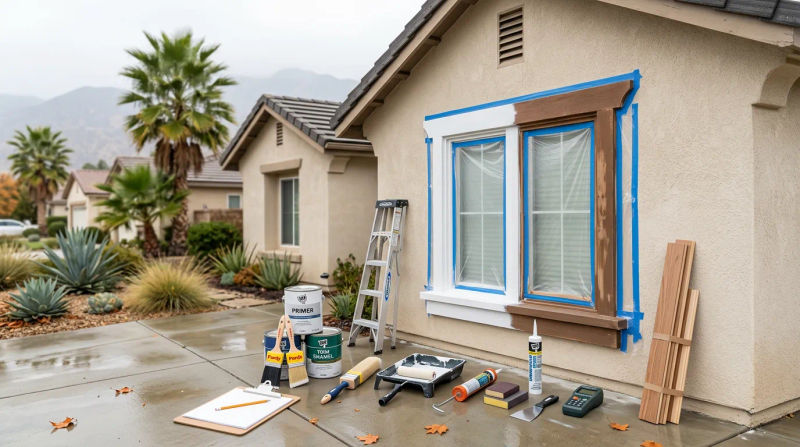
Hi, I’m Miguel Ramirez. With over 12 years of experience as a hands-on handyman here in the Corona and Fontana area, I’ve seen it all when it comes to home repairs. One of the most common questions I get from homeowners is about cost, and that’s completely understandable. You want to protect your home and make it look great, but you also need to stick to a budget. When it comes to something like painting your exterior trim, it's tough to find a straight answer online. That's why I wanted to share some real-world insights from the jobs my team and I handle every week. My goal is to give you a transparent look at the real exterior trim painting cost so you can plan with confidence.
Average Costs in Fontana
Let's get right to it. In Fontana, the strong sun and dusty conditions can do a number on exterior paint, causing it to fade, chalk, and peel faster than in other climates. This makes a fresh coat of paint on your trim, fascia, and eaves one of the best bang-for-your-buck improvements you can make. But what should you budget?
Based on the projects I see locally, here is a realistic Fontana exterior trim painting price range you can expect:
- Linear Foot Pricing: For a straightforward job, many contractors price by the linear foot. You can expect to pay between $3 to $7 per linear foot. So, for a home with 200 linear feet of trim, you might be looking at a range of $600 to $1,400. This often includes basic prep, caulking, and two coats of quality paint.
- Project-Based Pricing: Most homeowners want a single price for the whole job. For a typical single-story home in Fontana, like many of the 1950s Ranch-style houses in our neighborhoods, painting all the exterior trim (windows, doors, fascia, and eaves) usually falls between $1,500 and $3,500. For a larger or two-story home, the cost can range from $3,000 to $6,000 or more, depending on complexity.
Here’s a more specific breakdown:
- Cost to paint fascia and eaves Fontana: This is a common request. Fascia boards and eaves take a beating from the sun and rain. Budgeting around $800 to $2,000 for just these elements on a standard-sized home is a good starting point. The price depends heavily on their condition and height.
- How much to paint exterior window trim per foot: Window trim often requires more detailed work. While the $3-$7 per foot range applies, intricate designs or extensive caulking can push it toward the higher end of that spectrum.
These are just ballpark figures. The final price tag depends on several important factors that I'll break down next.
Factors That Affect Price
No two homes are exactly alike, and the condition of your trim is the biggest variable. Here’s what drives the cost up or down:
- Preparation Work: This is the most critical and time-consuming part of the job. In Fontana, the sun and dust create a chalky, grimy film on paint. Proper prep isn't just a quick rinse. It involves:
- Thorough Cleaning: Power washing or hand-scrubbing to remove all dirt, chalking, and mildew.
- Scraping and Sanding: Removing all loose, peeling, or cracking paint to create a smooth, stable surface for the new paint to adhere to.
- Priming: Applying a quality primer to bare wood and stained areas to ensure the topcoat looks even and lasts longer.
The more prep work needed, the higher the labor cost.
- Repairs: On many of the 1950s homes I work on, I often find sections of wood trim, especially on fascia boards or window sills, that have started to rot due to moisture exposure over the decades. This wood can't just be painted over. It needs to be repaired with epoxy wood filler or, if the damage is extensive, completely replaced. These repairs add material and labor costs to the initial painting quote.
- Accessibility and Height: A single-story Ranch-style home with low-pitched roofs is much easier and faster to work on than a two-story house. Working on second-story trim requires taller ladders, and sometimes even scaffolding, which increases labor time and safety precautions, raising the overall cost.
- Complexity of Trim: Is your trim simple and flat, or does it have intricate dental molding, corbels, or multiple layers? Detailed architectural features require more time for cutting in with a brush, which is more labor-intensive than using a roller or sprayer on a flat surface.
- Quality of Materials: You can choose between good, better, and best when it comes to paint and caulk. While using a basic exterior paint might save you a couple of hundred dollars upfront, I always recommend investing in a high-quality acrylic latex paint. It will resist fading from our intense sun, remain flexible, and protect your trim for years longer, saving you money in the long run.
How to Get the Best Value
Getting a good price isn't about finding the cheapest quote; it's about getting a durable, professional finish that protects your home for years. Here are my tips for getting the best value:
- Don't Skip the Prep: A cheap paint job is almost always one where the prep work was rushed. The paint might look good for a year, but it will start to peel and fail quickly, forcing you to pay to have it all redone. A quality job is all in the preparation.
- Bundle Projects: If you're planning to have your trim painted, consider if you need any other exterior handyman work done. Do you have a loose gutter, a damaged fence board, or a door that needs adjusting? Getting it all done in one visit can often save you money compared to scheduling separate service calls.
- Invest in Quality Paint: As I mentioned, paying a little more for a premium paint from a reputable brand is one of the smartest investments you can make. It will look better and protect your wood trim for 2-4 years longer than a budget paint, especially in our sunny climate.
- Plan for the Season: Here in Southern California, we can paint almost year-round. However, with the rains typically returning in October, it’s a practical time to plan your trim painting. Scheduling the work during a stretch of dry days ensures the wood is completely dry and the paint can cure properly without moisture-related delays or issues.
Questions to Ask Your Contractor
Before you hire anyone, make sure you feel confident in their process and professionalism. Here are some essential questions to ask:
- Can you provide a detailed, written estimate? It should break down labor, materials, and prep work separately.
- What specific prep work is included in your quote? (e.g., power washing, scraping, sanding, priming)
- What brand and line of paint and primer do you plan to use?
- How will you protect my plants, windows, and walkways?
- What is your process if you discover wood rot or other damage?
- Are you licensed and insured?
- What is the estimated timeline for my project?
A professional contractor will be happy to answer these questions and explain their process clearly.
Your Home's First Line of Defense
Painting your exterior trim is more than just a cosmetic upgrade; it’s essential maintenance that protects your home from moisture, sun damage, and pests. While the exterior trim painting cost can seem significant, it's a valuable investment in your property's health and curb appeal. By understanding the factors that influence price and asking the right questions, you can ensure you get a high-quality, lasting job that you'll be proud of for years to come.
For a personalized estimate in Fontana, contact Handyman Services by Carlos for a free consultation. My team and I are always happy to take a look at your home and provide a clear, detailed quote with no obligations.